
Your Guide to Water Quality Education and California Groundwater
Understanding what's in your water is the first step toward protecting your home and your family. This resource covers the essentials of water quality education, California groundwater conditions, and how water treatment works so you can make confident, informed decisions about the water coming out of every faucet in your Greater Sacramento home.

Water Is Life
An Article Published in The Link, March 2020
“Water is the driving force of all nature.” -Leonardo da Vinci
This sentence is still true today as about 71 percent of the Earth’s surface is water-covered and about 60 percent of our own body is made up of water.
According to Healthy H2O Systems owner Steve Miesen, heavy metal contaminants such as lead and mercury as well as chemicals such as chlorine and VOCs (Volatile Organic Compounds) can be found in many of our water sources. Steve said one way to eliminate these contaminants is by installing a whole house filter by Healthy H2O Systems. Steve said the filter can remove more than 600 potential health-affecting chemicals, which will allow for alkaline spring quality water you can drink as well as water for baths, showers and laundry.
Speaking of laundry, Steve said in addition to the installation of a whole-house water filtration system, Healthy H2O Systems also offers a device called Oxidize IT, which gets clothes clean without using laundry detergent or fabric softener.
No one likes doing laundry, even if you own a fancy washing machine,” Steve said. “But with Oxidize IT, you can reduce the time and cost of doing your laundry and also be environmentally friendly. The small device that connects to your washing machine allows you to wash your clothes the natural way.”
Steve said soaps and detergents don’t kill the bacteria and viruses found in our laundry – they just dilute them. He said Oxidize IT unit injects “Mother Nature’s Cleaning Agent” – Ozone – into the wash water, which quickly destroys bacteria, viruses, and organic contaminants without adding toxic chlorine or hot water. The device uses very little electricity and automatically produces the ozone to sanitize your laundry when your washing machine calls for water. It uses only cold water, so you also avoid the cost of using hot water.
California Groundwater Quality Resources
What should you know about Groundwater Quality in California?
A question we are frequently asked is whether residents of Northern California should be concerned about the quality of their personal and public water supplies. To answer that question, we use information provided by California’s State Water Resources Control Board and the nine regional Water Quality Control Boards, collectively known as the California Water Boards.
According to the California Water Boards, over 36 million California residents receive water from public sources, with an additional 2 million residents receiving water from private domestic wells or smaller water systems. This water comes from a variety of sources such as rivers, lakes, reservoirs, or groundwater sources like aquifers. Groundwater accounts for approximately 40% during a typical year, and 60% or more during our dry years, of the total water supply. Of course, we all know and understand that clean groundwater is critical to sustaining our society, the environment, industry, and agriculture.
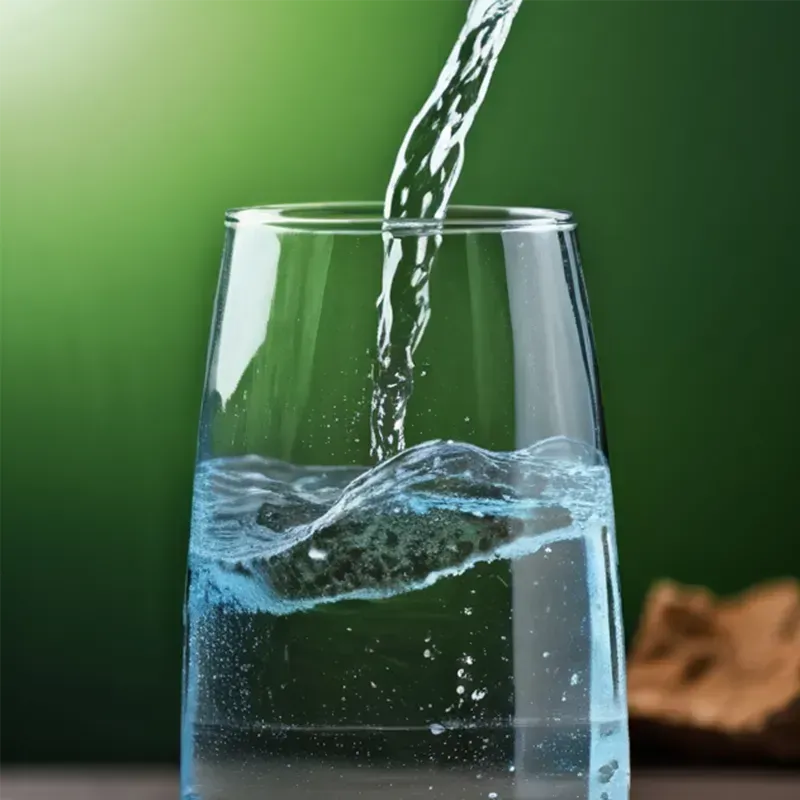
These groundwater sources can become contaminated due to natural or human-induced sources. Natural contamination can come from the Earth’s bedrock due to minerals such as arsenic or uranium. Human-induced contamination sources have been well documented for decades and include industrial discharges, urban activities, agriculture, and groundwater pumpage. These contaminants can flow through the ground soil and mix with the groundwater source thereby jeopardizing the quality of both public and private water sources. These sources of contamination are difficult and expensive to treat, which increases the cost of providing high quality water for both public and private well owners.
In 2000 the State Water Resources Board implemented the Groundwater Ambient Monitoring and Assessment (GAMA) Program. The GAMA Program is designed to comprehensively monitor California’s groundwater quality. Through an extensive sampling process of community and domestic water supply wells, the GAMA Program monitors for a variety of historic and emerging pollutants to characterize chemicals of concern and identify trends in groundwater quality. This valuable resource can help you identify possible contamination concerns near your residence or business.
You can learn more about the GAMA Program by clicking on this link.
You can view the interactive GAMA Program map by clicking on this link.
Through our understanding of your local water supply and by providing you a free water sample, Healthy H2O Systems can assess the quality of your water supply and provide you with the best water filtration system to provide you and your family with safe, high quality, great tasting water.
Contaminants Identified and Tracked in the California GAMA Program
Some of the specific contaminants identified in the GAMA Program include:
Nitrate – Although a necessary nutrient for plants, high nitrate levels in people can harm the respiratory and reproductive system, kidney, spleen and thyroid in children and adults. It is particularly harmful to infants. In California, nitrate is one of the most common groundwater contaminants. While 98 percent of the state’s community water systems meet all primary drinking water standards, between 10 to 15 percent of the public wells exceed the state’s standards for nitrate. They in turn need to be treated or blended with high-quality water.
Arsenic – Arsenic can enter the water supply from natural deposits in the earth or from industrial and agricultural pollution. It is widely believed that naturally occurring arsenic dissolves out of certain rock formations when ground water levels drop significantly. Health effects caused by arsenic depend on a variety of things. These include the type and amount of arsenic that has entered the body, how long you have been exposed to arsenic, and how the body responds to arsenic. Unborn babies, young children, people with long-term illnesses and elderly people are at greatest risk due to arsenic exposure.
TDS (Total Dissolved Solids) – While TDS itself may be only an aesthetic and technical factor, a high concentration of TDS is an indicator that harmful contaminants, such as iron, manganese, sulfate, bromide and arsenic, can also be present in the water. This is especially true when the excessive dissolved solids are added to the water as human pollution, through runoff and wastewater discharges.
Uranium – Uranium enters water by leaching from soil and rocks, or in releases from processing plants. Uranium has demonstrated toxic effects on human kidneys leading to their inflammation and changes in urine composition.
123TCP (1,2,3-Trichloropropane) – Exposure can occur from drinking or cooking with TCP-contaminated water and from inhaling its steam (such as while showering or washing dishes). Exposure may possibly occur from dermal contact as well. Contact with very high concentrations of TCP may irritate or burn the skin, nose, eyes, or throat, and it may cause drowsiness or liver damage.
Perchlorate – The principal health concern is that if perchlorate gets into drinking water it could damage the thyroid gland, which controls growth, development and metabolism. Perchlorate interferes with iodide uptake into the thyroid gland, and because iodide is an essential component of thyroid hormones, it disrupts how the thyroid functions.
Healthy H2O Systems Water Solutions for Poor Water Quality
Healthy H2O Systems can help you ensure your residential or commercial water supply is free from the specific contaminants identified and tracked by the GAMA Program. Contact us for a FREE water test and water quality consultation. We will be happy to provide you with affordable and effective solutions.
- Arsenic
- Nitrate
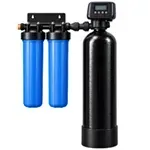
Healthy H2O Systems Hybrid 2 Stage Whole House Water Filter
- TDS
- 123TCP
Reverse Osmosis Required – Request Consultation
- Perchlorate
- Uranium

Product Brochures
Download one or all of our Product Brochures
These educational brochures can help you get a better understanding of what the Healthy H2O Systems products offer as solutions to providing you with the cleanest and healthiest water available. Simply click on the desired link below and determine how our systems work and how they do provide you with the healthiest water available. If you have any questions or would like more information, please call us on 916-226-3881 or complete the form on this page and we will get back to you.
Groundwater Questions, Answered
Frequently Asked Questions About Water Quality in the Sacramento Region
What makes California groundwater different from water in other parts of the country?
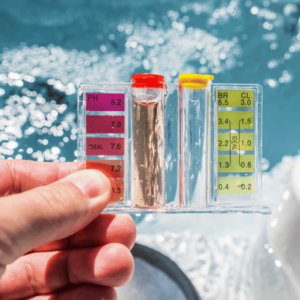
California groundwater, particularly in the Greater Sacramento and Placer County regions, tends to have elevated levels of iron and manganese due to the local geology of NorCal aquifers. Low pH levels are also common in well water here, meaning the water is naturally acidic enough to corrode copper pipes and fixtures over time. Municipal water in the region relies heavily on chlorine-based treatment, which can leave behind noticeable taste and odor issues. These regional characteristics are why testing your specific water source is the recommended starting point for any treatment plan.How can I tell if my well water has a low pH problem without a lab test?
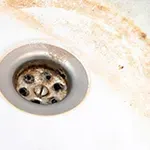
Some signs of acidic well water include pinhole leaks developing in copper pipes, blue-green staining around drains and fixtures caused by copper corrosion, and a slightly metallic or sour taste. However, these symptoms can overlap with other issues, and pH levels that are problematic for your plumbing may not produce any obvious taste or odor at all. A professional water test is the most reliable way to confirm acidity levels and determine whether a Natural Neutralizer Filter using calcium carbonate or magnesium oxide is the right correction for your system.What is the difference between a salt-free water conditioner and a traditional salt-based water softener?
A traditional salt-based water softener exchanges calcium and magnesium ions with sodium ions, which removes hardness but adds sodium to the water and produces a saltwater discharge. A salt-free system like the Dropson anti-scaling technology conditions the water so that minerals cannot adhere to surfaces and form scale, without removing those minerals from the water. The result is limescale prevention without any salt, chemicals, water discharge, or ongoing maintenance. For homeowners who want to protect appliances and plumbing without the upkeep of a traditional softener, the salt-free approach is a practical alternative.Is UV disinfection safe, and does it change the taste or smell of my water?
UV disinfection using VIQUA technology is a chemical-free process that does not add anything to your water. It works by exposing water to ultraviolet light, which disrupts the DNA of microorganisms including bacteria like E. coli, viruses, and parasites such as Giardia and Cryptosporidium, preventing them from reproducing. Because nothing is added to the water, there is no change in taste, odor, or mineral content. It is widely used for well-water households where biological contamination is a concern and is considered one of the most effective methods for chemical-free pathogen control available for residential systems.Can a whole-house filter handle both chlorine and heavy metals at the same time?
Yes. A hybrid two-stage whole-house filtration system using KDF 55 and catalytic carbon is designed to address multiple contaminant categories in a single pass. KDF 55 is effective at reducing heavy metals, chlorine, and certain bacteria, while catalytic carbon targets chloramines, VOCs, pesticides, and odors. Together, the two media work across a broader range of contaminants than either could handle alone. The system is also designed to retain naturally occurring beneficial minerals, so you are removing what you do not want without stripping out what is good for you.What causes the rotten-egg smell in well water, and how is it treated?
That smell comes from hydrogen sulfide gas, which is naturally occurring in some groundwater and is particularly common in well water throughout the Sacramento region. It is produced by certain bacteria that break down organic matter underground. The most effective residential treatment is an air injection oxidizing filtration system, which introduces oxygen into the water to oxidize the hydrogen sulfide, converting it into a form that can be filtered out. The system uses a single-tank design with automatic backwashing, handling both the odor and related iron and manganese issues without requiring manual intervention.Do I need more than one type of treatment system, or can one system handle everything?
Most homes benefit from a combination of systems rather than a single unit, because different contaminants require different treatment methods. A whole-house filter handles chlorine and VOCs but is not designed to neutralize acidic pH or eliminate bacteria. A UV system addresses biological threats but does not remove iron or scale. The right combination depends entirely on your water chemistry. A free in-home water test identifies exactly which contaminants are present, which is the most reliable basis for building a treatment plan rather than installing systems you may not need.
Homeowners Across the Greater Sacramento Region